Remote monitoring · InCor
RPMS
Remote Patient Monitoring System
Heart Institute (InCor), Hospital das Clínicas, University of São Paulo Medical School
Objective
RPMS uses watches and a mobile app to track physiological measurements outside the hospital. The phone processes the signals and sends results to a dashboard that clinicians can consult.
My work
I worked with prototype watches, helped define the recording protocols and organized the data. With the team, I developed the photoplethysmography (PPG) preprocessing pipeline and the algorithms used in the project.
How it works
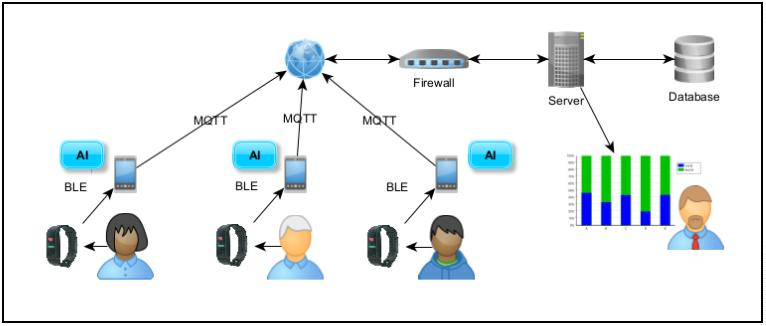
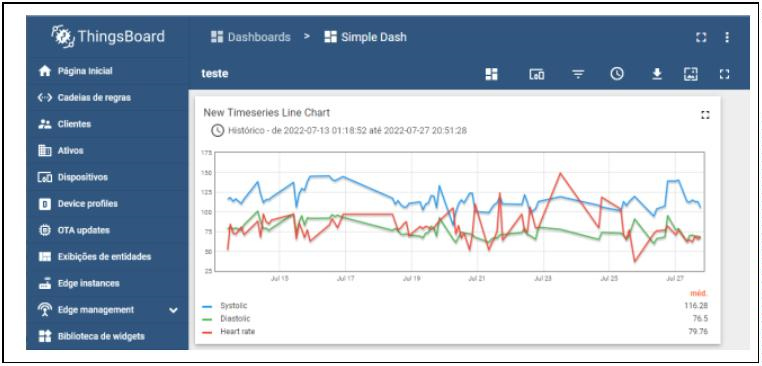
The watch sends PPG to the Android app over Bluetooth Low Energy. The phone processes the signal, estimates blood pressure and heart rate, and sends results over MQTT to a ThingsBoard server. The dashboard displays each patient’s measurements over time.
Results and evaluation
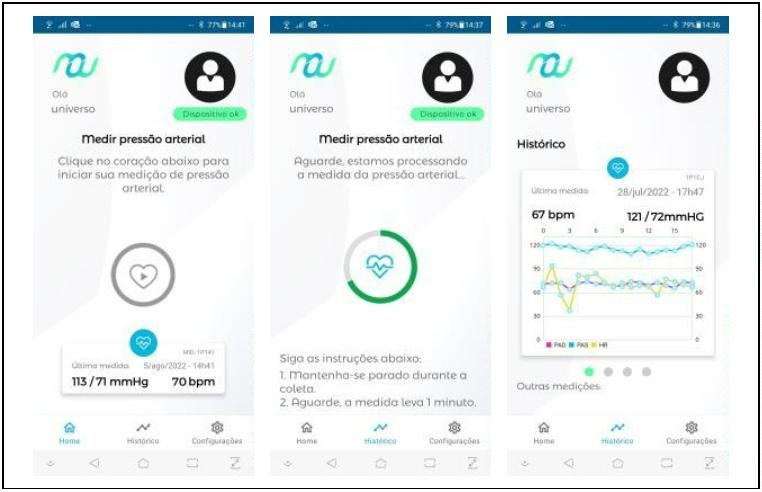
In the architecture published in 2022, the app kept a history of measurements on the phone and sent systolic pressure, diastolic pressure and heart rate estimates to the server.
Collection protocol and signal processing
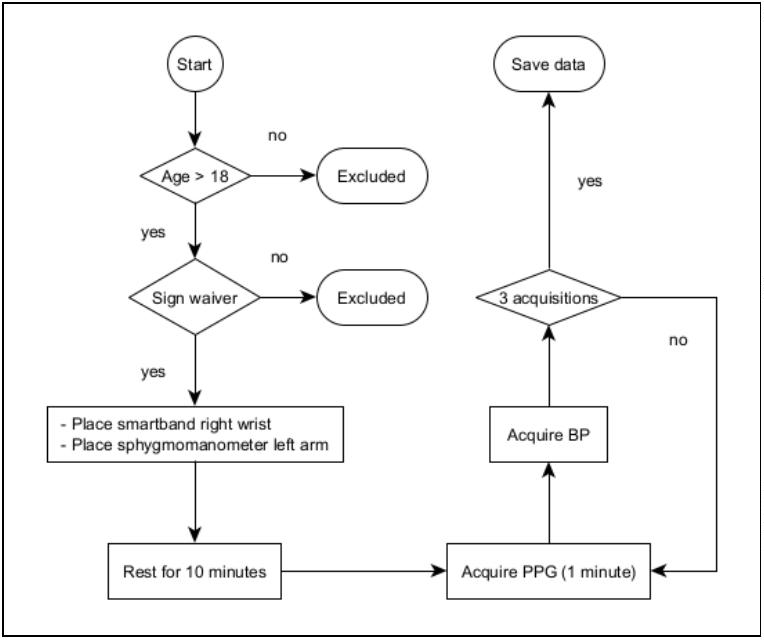
Under the 2022 protocol, volunteers rested for 10 minutes, then completed three one-minute PPG recordings with cuff blood pressure measurements in between. Signal processing used a 0.5–10 Hz filter, resampling from 200 to 125 Hz and 8-second windows. Test participants were kept separate from those used for training.
Algorithms and research
The 2022 system estimates blood pressure and heart rate. Related studies examined PPG signal quality, diabetes classification and sleep staging. The papers below describe that work.
Related papers
- Quino JAP, Cardenas DAC, Toledo MAF, Dias FM et al. Enhancing Photoplethysmography-Based Sleep Staging Models Through Temporal Context Optimization. Studies in Health Technology and Informatics, 2025.
- Dias FM et al. Arrhythmia classification from single-lead ECG signals using the inter-patient paradigm. Computer Methods and Programs in Biomedicine, 2021.
- Dias FM et al. Image-based deep learning for emergency electrocardiogram classification. medRxiv · Preprint, 2026.
- Dias FM et al. Artificial Intelligence-Driven Screening System for Rapid Image-Based Classification of 12-Lead ECG Exams: A Promising Solution for Emergency Room Prioritization. IEEE Access, 2023.
- Dias FM et al. Quality Assessment of Photoplethysmography Signals For Cardiovascular Biomarkers Monitoring Using Wearable Devices. arXiv · Preprint, 2023.
- Oliveira FAC, Dias FM et al. Machine Learning-Based Diabetes Detection Using Photoplethysmography Signal Features. SBCAS, 2024.